Mostrando entradas con la etiqueta Aristotle. Mostrar todas las entradas
Mostrando entradas con la etiqueta Aristotle. Mostrar todas las entradas
La Laguna de Aristóteles
Se ofrece la traducción de unos fragmentos del texto publicado en Current Biology.

Current
Biology
Volumen 20, Número 3, 9 de
febrero de 2010, páginas R84-R85
Aristotle’s Lagoon
BBC. www.bbc.co.uk
http://dx.doi.org/10.1016/j.cub.2010.01.032
El
sustancial legado en Biología del filósofo griego es a menudo olvidado, según afirma Armand
Leroi en un nuevo programa de televisión. Nigel Williams informa.
Muchos biólogos modernos ven
cualquier cosa antes de Darwin como la prehistoria, como investigación plagada
de malentendidos y errores. Pero este punto de vista deja a un lado una
extraordinaria gama de trabajo durante siglos con mucho valor y perspicacia.
Así que una nueva mirada sobre el trabajo biológico de Aristóteles en una isla
griega casi 2.500 años atrás, supone un recordatorio fresco y fascinante del
pensamiento antiguo. Un nuevo programa de televisión a cargo del biólogo
evolutivo Armand Leroi, del Imperial College de Londres, centrado en el trabajo
biológico de Aristóteles estrenado por la BBC el mes pasado, pone de relieve
hasta qué punto algunas investigaciones antiguo han iluminado el mundo
biológico. "La biología de Aristóteles está casi completamente olvidada",
dice Leroi, quien recuerda que se encuentra expuesta a través de Historia animalium, trabajo que encontró
en una librería de Atenas hace una década. "En los diez años transcurridos
desde entonces, he estado tratando de entender lo que había estado sucediendo
en la magnífica mente de Aristóteles".
Aristóteles fue un miembro
de la élite del siglo IV a. C. en Atenas. Nació en Tracia, en el noreste de la
Grecia moderna y su padre fue médico del rey Filipo de la vecina Macedonia.
Marchó a Atenas para estudiar en la Academia de Platón, donde permaneció hasta
la muerte de Platón en el 348 a. C. Como relata Leroi, Aristóteles hizo un
viaje de dos años a la isla del este del Egeo de Lesbos, para estudiar la fauna
en los alrededores de una laguna espectacular, que ahora se llama Kallonis, que
comprende una gran parte del centro de la isla.
El libro revela cómo Aristóteles
establece el estudio de los animales de la laguna: por la observación combinada con
la disección y la descripción de muchos de los animales más pequeños.
Rápidamente observó que los delfines no son peces, como usualmente se piensa,
ya que respiran aire. […]
"Una vez ordenados los
datos, comienza a enfrentar la teoría con la observación. El problema más
profundo es que en el huevo y el útero se origina la vida, cómo los seres vivos
llegar a ser", dice Leroi. Aristótéles es la primera persona de la que tenemos
constancia de la apertura de un huevo y la descripción del embrión de un pollo
- "la primera persona en describir el origen de un ser vivo", dice. Y esta
observación demostró ser uno de los mayores retos para Aristóteles. No creía que
una descripción del material de dicho evento fuera suficiente para explicarlo.
"Se necesita algo más, algo que recibe de sus padre, que lo in-forma, a lo
que llamó ‘eidos’.” […]
Leroi cree que gran parte de
la biología moderna fue fundada por Aristóteles, "así que ¿por qué nos hemos
olvidado de él?", se pregunta. Una de las razones fue que algunos aspectos
de su biología estaban equivocados.
Mientras que Aristóteles
propuso el eidos de los padres como
lo que dirige el desarrollo de sus crías, quedó desconcertado por las
anguilas y las moscas. Las anguilas eran entonces abundantes en la laguna de Lesbos
y, cuando Aristóteles las disecó con otros peces, se quedó perplejo al no encontrar
evidencia anatómica de los tejidos reproductivos. No fue sino hasta muchos
siglos después que el extraordinario ciclo de la vida de estas anguilas fue descubierto,
revelando que migran de vuelta hacia el mar a través de miles de kilómetros
para reproducirse. Así que Aristóteles propuso que se generan a partir del barro
en el que se encuentra comúnmente.
Aristóteles no era
evolucionista. Se mostró en desacuerdo con las ideas creacionistas de Platón,
pero él fue un “eternalista”, dice Leroi. La eternidad niega la historia, todo
se mantiene igual y Aristóteles no dice nada acerca de los fósiles, constata Leroi. […] A Leroi le causa perplejidad que Aristóteles
no tuviese en consideración los restos petrificados de un impresionante bosque al oeste de
Lesbos, que casi con toda seguridad habría conocido. […]
Después de la estancia de
Aristóteles en Lesbos, regresó al continente para convertirse en tutor del hijo, de 13 años de edad, de Filipo de Macedonia: Alejandro. No está claro qué
influencia tuvo Aristóteles sobre el futuro Alejandro Magno. Aristóteles
regresó a Atenas en el año 335 a. C. y pasó los siguientes 12 años dirigiendo
su propia academia (el Liceo), donde le gustaba caminar y hablar con sus
compañeros. Él tuvo conciencia de haber iniciado una escuela o una
investigación organizada superando con creces todo lo que había pasado antes.
Su legado científico no es solo amplio sino que es monumental. Fue leído, copiado y plagiado y, en el siglo
XIII, se enseñó en las universidades de toda Europa.

Current Biology
Volume 20, Issue 3, 9 February 2010, Pages R84–R85
Feature
Aristotle's lagoon
Nigel Williams
Aristotle's Lagoon, BBC. www.bbc.co.uk
http://dx.doi.org/10.1016/j.cub.2010.01.032, How to Cite or Link Using DOI
Permissions & Reprints
Summary
The Greek philosopher's substantial biological work is often now overlooked according to Armand Leroi in a new television programme. Nigel Williams reports.
Main Text
Many modern biologists see anything before Darwin as prehistory: research riddled with misunderstandings and errors. But this view misses an extraordinary range of work over centuries with much of value and insight. So a new look at the biological work of Aristotle, coming from a Greek island almost 2,500 years ago, provides a fresh and fascinating reminder of ancient thinking. A new television programme by evolutionary biologist Armand Leroi, of Imperial College London, on the biological work of Aristotle shown by the BBC last month, highlights just how much some ancient research illuminated the biological world. “Aristotle's biology is almost completely forgotten,” says Leroi, who recalls coming across a translation of Aristotle's biological work Historia Animalium in an Athens bookshop a decade ago. “In the ten years since, I've been trying to understand what had been going on in Aristotle's magnificent mind.”
Insight: The deep bay of Kallonis in the centre of the Greek island of Lesvos was the focus of Aristotle's work studying the creatures in and around it. (Photo: Armand Leroi.)
Figure options
Aristotle was a member of the fourth-century BC Athens elite. He was born in Thrace in the north-east of modern Greece, and his father was physician to King Philip of neighbouring Macedonia. He went to Athens to study at Plato's Academy where he stayed until Plato's death in 348 BC. As Leroi recounts, Aristotle then took a two-year trip to the eastern Aegean island of Lesvos, to study the fauna in and around a dramatic lagoon, now called Kallonis, which comprises a large part of the centre of the island.
The book reveals how Aristotle set to studying the animals of the lagoon: observation combined with dissection and description of many of the smaller ones. He quickly observed that dolphins were not fish, as commonly thought, as they breathed air as he watched them in the lagoon. Aristotle also noted that the abundant cuttlefish that come into the lagoon to breed defecate through a tube at the top of their head, quite in contrast to the digestive systems of most other animals. And Aristotle quizzed the locals on their observations. “As Darwin spoke to pigeon fanciers, Aristotle spoke to fishermen,” says Leroi.
“What he does next was revolutionary: having sorted the facts, he begins to pit theory against observation. The deepest problem was how life originates in the egg and the womb, how living things come to be”, says Leroi. He's the first person we have on record opening an egg and describing the embryo of a chicken — the first person to describe the origin of a living thing, he says. And this observation proved one of the biggest challenges to Aristotle. He didn't believe a material description of such an event was sufficient to explain it. “Something else is needed, something it gets from its parents that shaped it — he called this thing ‘eidos’.” This element is ‘form’, says Richard King, of the University of Glasgow, Leroi's colleague and co-scriptwriter. “Eidos is something like information.”
Aristotle argued that all animals had a soul — when an organism dies the soul dies with it. The soul is not material but it controls matter — it is what twenty-first century biologists call a system. “What he calls eidos, we call genes,” says Leroi. Every species, Aristotle believes, has its own eidos.
The scientific legacy he left is not vast, it is monumental. It was read, copied and plagiarised and, by the thirteenth century, it was taught in universities throughout Europe.
Leroi believes much of modern biology was founded by Aristotle, “so why have we forgotten him?” he asks. One of the reasons was that some of his biology was wrong.
While Aristotle proposed the eidos from parents directed the development of their offspring, he was baffled by eels and flies. Eels were then abundant in the Lesvos lagoon and, when Aristotle dissected them and compared them with other fish, he was puzzled to find no anatomical evidence of reproductive tissue. It was not until many centuries later that the extraordinary life cycle of these eels was unravelled, revealing that they migrate back out to sea over thousands of kilometres to breed. So he proposed that they generated from the mud in which they were commonly found.
Aristotle also puzzled over the appearance of maggots in rotting flesh and likewise concluded that they arose spontaneously. “A disaster”, says King. “One of his catastrophic mistakes.” For these creatures their eidos seems to have had an altogether more prosaic and erroneous origin. And it was almost 2,000 years before we have a record of an experiment in which one dead fish was covered in muslin and another left open, to show that maggots do not spontaneously generate.
And Aristotle was no evolutionist. He disagreed with Plato's creationist ideas, but was himself an ‘eternalist’ says Leroi. Eternity denies history where everything stays the same and Aristotle doesn't say anything about fossils, Leroi notes. “Aristotle realised species are related but have their own role. Combatants simply fight for ever.” Leroi is puzzled that Aristotle did not consider the petrified remains of an impressive forest in the west of Lesvos that he almost certainly would have known about. The massive ancient tree trunks were turned to stone by a volcanic eruption but remain, even to today, an impressive sight amongst an otherwise barren Mediterranean landscape.
And it would be hard for Aristotle if he were around now to ignore change. “Biodiversity has declined,” says Leroi. And the fishermen are complaining of declining catches. The lagoon is just a microcosm of wider ecological degradation and devastation in the eastern Mediterranean and beyond. It represents an “unutterable sadness”, says Leroi at the site where Aristotle had done all that biology so many centuries ago. But Aristotle made no mention of the spectacular flocks of flamingoes that now appear on Lesvos. The magnificent birds are apparently a relatively new arrival over recent decades to Aristotle's lagoon. While fishermen and some ecologists lament the demise of many long familiar species, a dramatic new bird has found food there in recent years: one sign of changes taking place in ecosystems on a wider scale.
After Aristotle's stay on Lesvos, he returned to the mainland to become tutor to the 13-year-old son of Philip of Macedonia, Alexander. It is not clear what influence Aristotle had on the future Alexander the Great. Aristotle came back to Athens in 335 BC and spent the next 12 years running his own academy, where he liked to walk and talk with his colleagues. He was widely thought to have begun a school or organised enquiry far exceeding anything that had gone before. But Leroi is keen to champion Aristotle's biology. “The scientific legacy he left is not vast, it is monumental.” It was read, copied and plagiarised and, by the thirteenth century, it was taught in universities throughout Europe, says Leroi. Creatures are exquisitely fitted to their environment. Adaptation requires an explanation. “They cannot assemble themselves, they need information,” says Leroi. “And Aristotle was a biologist who realised that.”
Copyright © 2010 Published by Elsevier Ltd. All rights reserved.


Marco histórico, sociocultural y filosófico de Aristóteles
If you are an English language reader, look at the interesting BBC video and read about Professor Leroi of the Imperial College of London at the end of this post.
Aristóteles nació en el año 384 a. de C., en la ciudad de Estagira. Esta ciudad había sido fundada por jonios, los griegos de más raigambre. Sin embargo la región era considerada por los griegos del sur como pueblos casi bárbaros que ni siquiera estaban organizados en polis sino en monarquías tribales. El padre de Aristóteles fue médico oficial del rey de Macedonia y es muy posible que Aristóteles, siendo niño, conociera a Filipo II, quien era de su edad. Filipo II sería el padre de Alejandro Magno.
 |
| Alejandro es aleccionado por Aristóteles. Imagen del film de Oliver Stone, de 2004. |
Aristóteles llega a Atenas con unos 17 años de edad a cursar estudios en la Academia fundada por Platón, de quien fue discípulo durante veinte años. Con el pasar de los años Filipo II ganó el trono de Macedonia, la cual ganó en esplendor pues el rey era un gran admirador de la cultura griega, de la que quiso formar parte. Esto favoreció a Aristóteles pero con el tiempo le puso en el punto de mira de algunos atenienses puesto que Filipo II quiso crear una Liga panhelénica y para ello realizó una serie de conquistas que hicieron temer a Atenas volver a caer bajo el dominio de extranjeros nuevamente. Aristóteles marchará de Atenas.
Aristóteles se instalará en la isla de Lesbos donde observará, junto a su fiel discípulo Teofrasto, la vida de los animales marinos y terrestres así como la vegetación. Y si bien puede decirse que la Biología como hoy la conocemos no nace hasta el siglo XIX también puede afirmarse que entonces se miró por primera vez el entorno con ojos de naturalista*.
Después tuvo que abandonar esta tarea para acudir a la llamada de Filipo II quien le encargó la educación de su hijo Alejandro. Filipo II compensaría esta educación con la repoblación de Estagira, la ciudad natal de Aristóteles, la cual se encontraba desolada.
Alejandro en sus campañas militares se haría acompañar de personas interesadas en la recopilación de materiales que podían servir para las investigaciones de Aristóteles y sus discípulos. Eso ocurrió una vez que Aristóteles había vuelto ya a Atenas y había fundado su propia escuela, alternativa a la Academia de Platón. Si la Academia había recibido el nombre del bosque donde se encontraba el monumento al héroe Academos, el Liceo** tomó su nombre del monumento sagrado más cercano al lugar donde se instaló, la estatua en honor a Apolo Licio (Apolo en su manifestación de cazador de lobos). Los del Liceo también eran llamados "peripatéticos" por sus paseos debajo del pórtico y por los jardines alrededor del Liceo (Peri pathos). En el 323 a. C. morirá Alejandro y Aristóteles temiendo lo peor se marcha "para que la ciudad de Atenas no atente dos veces contra la filosofía" (en clara alusión a Sócrates).
En lo social, en Atenas, se trató de una época de inestabilidad política y de pobreza material con la decadencia ciudadana que eso conlleva. Sin embargo, el arte y la cultura se renovaron, especialmente en escultura (Praxíteles) y en arquitectura, donde se dio fin a las contrucciones que habían quedado en suspenso en Atenas a causa de las guerras. También destacaron grandes oradores (Demóstenes, quien puso a los atenienses contra los macedonios) e historiadores (como Jenofonte o Tucídides). En el teatro se siguieron escribiendo tragedias y comedias.
En lo estrictamente filosófico la Academia fue, sin duda, el marco general de Aristóteles. En ella el respeto y la libertad intelectuales eran grandes y en esto se diferenciaba de otras escuelas, como la pitagórica o la de Epicuro donde había componentes dogmáticos y religiosos. Aristóteles pronto destacó y como gran discípulo que fue no desmereció al maestro y fue capaz de hacer su propia filosofía a partir de la crítica de la de aquel. Lo que a Aristóteles se le presentó con la oportunidad de educar a Alejandro fue aquello que cualquier miembro de la Academia soñaba: formar al rey-filósofo, es decir, al mejor guardián de entre los guardianes, tal y como los concibe Platón en La República. Sin embargo, en la práctica, la mentalidad imperial y universal de Alejandro chocó con el apego que Aristóteles le tenía al modelo clásico, es decir, al de la polis griega tradicional, proponiendo para estas distintos regímenes políticos en función del carácter de sus pueblos. Aristóteles fue, asimismo, un gran conocedor de la filosofía presocrática -de la que conocemos muchos detalles gracias a él- y también de las opiniones de los sofistas, tal y como muestra en su Metafísica cuando explica y refuta a aquellos y cuando rebate a estos.
** Aristóteles tuvo que alquilar los terrenos puesto que al no ser ciudadano ateniense no podía ser propietario de los mismos.
*

| |||||||||||||||||||
 | |||||||||||||||||||
See also:Imperial College is not responsible for the content of external websites Wednesday 13 January 2010 By John-Paul Jones A new BBC documentary, developed and presented by Imperial’s professor of evolutionary developmental biology, Armand Marie Leroi, will reveal the debt modern biology owes to the ancient Greek polymath Aristotle. Airing on Sunday at 9pm on BBC4 Aristotle’s Lagoon follows the professor in his exploration of the Greek lagoon which inspired Aristotle’s fundamental ideas on biology. Professor Leroi, from the Department of Life Sciences, answers some questions on the programme below: Why was Aristotle so important for science? Well, Aristotle is a remarkable figure. Everyone knows him as the father of logic and philosophy, but people forget that he was the father of biology too. About a third of his surviving texts relate to biology and actually his thoughts on the subject inform his philosophy, his metaphysics and his ideas on a number of topics. In many ways he began it all, in effect developing an entire course on biology, including the classification of animals. Why have people forgotten Aristotle’s contribution? Up until the seventeenth century’s scientific revolution, when people spoke about biology they really spoke about Aristotle. His influence on early science was immense. It was so massive in fact that the science revolutionaries felt they had to destroy him during their attack on the old scientific system. Despite this the impact of Aristotle’s thought endures to this day. Even Darwin remarked: “Linnaeus and Cuvier have been my two gods, though in very different ways, but they were mere schoolboys to old Aristotle.” What we’re trying to do with this programme is recover Aristotle for biology. How did your new programme come about? Ten years ago I was on holiday in Greece. I walked into a second hand bookshop in Athens and bought a copy of Aristotle’s Historia Animalium, or ‘History of Animals’. In the book’s preface the Scots biologist D'arcy Thompson claimed Aristotle did most of his biological work at a lagoon on the island of Lesvos. It just so happened that I was going to Lesvos anyway to visit some Imperial researchers at the university there. I spent two weeks at the lagoon and it really opened my eyes to what an amazing biologist Aristotle was. He had a deep and integrated physiological system for understanding the world around us. It inspired me to begin working on a book, together with my friend and colleague Richard King (from the University of Glasgow’s Philosophy Department). Having made a Channel Four series based on my book Mutants I went on to make programmes for the BBC and when they asked if I’d like to make another, on a subject of my choice, I chose Aristotle. Is it useful for scientists to have knowledge of the history of their field? I don’t think knowledge of the history of science is essential but it does give a more global view and appreciation of the possibilities of science. One also sees echoes of issues we grapple with these days. It’s certainly been useful for me. As an example: Aristotle was insistent that the crucial point of understanding in dissection comes when putting the parts back together to see how an animal works as a whole. This very much chimes with systems biology today. Another of your BBC programmes was on Charles Darwin and his contribution to science. Of the two, which project did you feel more passionate about? Darwin is obviously hugely important, and also inspiring. I’d say, however, that this programme is extra special for me because, while everyone knows of Darwin, Aristotle’s contribution is so undervalued. People always say “Thanks to Darwin...” or “Because of Darwin...” and we want them to say “Thanks to Aristotle...” As a university scientist why is it important for you to reach out to the public at large, through programmes like Aristotle’s Lagoon? For three reasons: Firstly the public pays for science, so it’s important that we show them what we’re doing. Secondly, there are always anti-scientific forces in society, in various guises, and an ongoing battle. Scientists should always take the opportunity to show people how science is the only way to understand the natural world. Finally, science is a source of stories. These can give us joy and inspiration in what we do, and they have the added quality of being true, or as true as we can know. It’s natural for scientists to want to share these stories. You revisited the lagoon when filming the programme. Do we know how much it might have changed since Aristotle visited millennia ago? Aristotle’s work is perhaps the oldest description of a natural habitat in the world but he doesn’t give us a comprehensive diary of his time at the lagoon. Everything he mentioned, however, can still be found at the lagoon, from scallops at the lagoon’s mouth to the fish which travel in seasonally. He actually mentioned that scallop numbers had been high but had dwindled due to overfishing. Speak to a Greek fisherman today and he will say exactly the same thing. It suggests a cycle that’s been going on for thousands of years. One of the most conspicuous changes is the presence of flamingos there today. They certainly weren’t mentioned by Aristotle but that’s not surprising as it appears they arrived in the last 50 years. They have been steadily moving east due to changes in the marshes that served as their usual habitat. The lagoon hasn’t escaped some environmental degradation either, especially with run off pollution in the water. Despite this, though, the diversity which Aristotle brilliantly recorded can still be found there today. Aristotle’s Lagoon airs this Sunday, 17 January, at 9pm on BBC4, as part of the channel’s ‘Beautiful Minds’ series. |
Aristotle: Logic

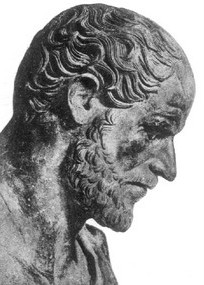 Aristotelian logic, after a great and early triumph, consolidated its position of influence to rule over the philosophical world throughout the Middle Ages up until the 19th Century. All that changed in a hurry when modern logicians embraced a new kind of mathematical logic and pushed out what they regarded as the antiquated and clunky method of syllogisms. Although Aristotle’s very rich and expansive account of logic differs in key ways from modern approaches, it is more than a historical curiosity. It provides an alternative way of approaching logic and continues to provide critical insights into contemporary issues and concerns. The main thrust of this article is to explain Aristotle’s logical system as a whole while correcting some prominent misconceptions that persist in the popular understanding and even in some of the specialized literature. Before getting down to business, it is important to point out that Aristotle is a synoptic thinker with an over-arching theory that ties together all aspects and fields of philosophy. He does not view logic as a separate, self-sufficient subject-matter, to be considered in isolation from other aspects of disciplined inquiry. Although we cannot consider all the details of his encyclopedic approach, we can sketch out the larger picture in a way that illuminates the general thrust of his system. For the purposes of this entry, let us define logic as that field of inquiry which investigates how we reason correctly (and, by extension, how we reason incorrectly). Aristotle does not believe that the purpose of logic is to prove that human beings can have knowledge. (He dismisses excessive scepticism.) The aim of logic is the elaboration of a coherent system that allows us to investigate, classify, and evaluate good and bad forms of reasoning.
Table of Contents
- The Organon
- Categories
- From Words into Propositions
- Kinds of Propositions
- Square of Opposition
- Laws of Thought
- Existential Assumptions
- Form versus Content
- The Syllogism
- Inductive Syllogism
- Deduction versus Induction
- Science
- Non-Discursive Reasoning
- Rhetoric
- Fallacies
- Moral Reasoning
- References and Further Reading
- Primary Sources
- Secondary Sources Thanks to Internet Encyclopedia of Philosophy
The Ancient Greek philosophers
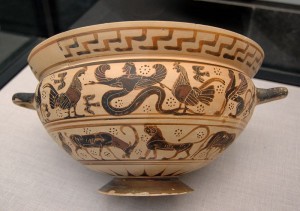
The Ancient Greek philosophers have played a pivotal role in the shaping of the western philosophical tradition. This article surveys the seminal works and ideas of key figures in the Ancient Greek philosophical tradition from the Presocratics to the Neoplatonists. It highlights their main philosophical concerns and the evolution in their thought from the sixth century BCE to the sixth century CE.
The Ancient Greek philosophical tradition broke away from a mythological approach to explaining the world, and it initiated an approach based on reason and evidence. Initially concerned with explaining the entire cosmos, the Presocratic philosophers strived to identify its single underlying principle. Their theories were diverse and none achieved a consensus, yet their legacy was the initiation of the quest to identify underlying principles.
This sparked a series of investigations into the limit and role of reason and of our sensory faculties, how knowledge is acquired and what knowledge consists of. Here we find the Greek creation of philosophy as “the love of wisdom,” and the birth of metaphysics, epistemology, and ethics. Socrates, Plato, and Aristotle were the most influential of the ancient Greek philosophers, and they focused their attention more on the role of the human being than on the explanation of the material world. The work of these key philosophers was succeeded by the Stoics and Epicureans who were also concerned with practical aspects of philosophy and the attainment of happiness. Other notable successors are Pyrrho’s school of skepticism and the Neoplatonists such as Plotinus who tried to unify Plato’s thought with theology.
Table of Contents
- Presocratics
- Socrates and his Followers
- Plato
- Aristotle
- Stoicism
- Epicureanism
- Skepticism
- Neoplatonism
Thanks to Internet Encyclopedia of Philosophy
Suscribirse a:
Entradas (Atom)